Showing posts with label wedding photography business. Show all posts
Showing posts with label wedding photography business. Show all posts
Friday, January 4, 2008
New Photo Contest!
Another Photo Contest at Wedding Photography Project. This time you can win a $1000 shopping cart system!


Thursday, May 24, 2007
Advice for aspiring photographers...
I was recently asked what advice I would give photographers just starting out. As you have probably figured out, I like lists, so here's a list of my advice!
- Follow your passion. Shoot in a the way that you like and inspires you. Don't get caught in the trap of "the way things should be done."
- Be yourself. No matter how much you like a particular website, a person's work, their choice in music, or the clever way they wrote their "About me" page, DON'T COPY IT. Being inspired to a better level is good, but be yourself.
- Learn about light and learn how to see light.
- Don't be afraid to screw up. I throw out 3 out of every 4 images I shoot. I make mistakes on purpose just to see if I might get something cool.
- Learn the "rules" of composition. Sometimes they help to make things interesting. Other times, just throw them out the window to try something interesting.
- Be a good business person. If you have trouble with some aspect of business - reading a profit and loss report, marketing, or anything else - figure out how to do it better. Whether that is by reading a book, finding a mentor, or hiring someone that does that well.
- Show people what you want them to hire you to do. If you love to do traditional portraiture, show books and images that highlight that. If you don't care if you ever do another family group photo, why have an album filled with them?
- Backup gear is important.
Wednesday, May 23, 2007
Gearbox!
I quite often get questions about what kind of gear I use. I'll happily tell you all, but first I have to get on my soapbox.
The most important piece of gear you will ever have in photography, is the gray thing sloshing around in your noggin! Gear is just a means to an end. Great photographers can create great images with cheap gear and horrible photographers can buy all the gear they want and it won't make any difference!
Here is the gear I use at almost every wedding:
-Canon 30D & 20D cameras
-Tokina 12-24 f4
-Canon 17-55 f2.8 IS
-Canon 50 f1.4
-Canon 85 f1.8
-Sigma 70-200 2.8 HSM
-Pocketwizards
-Canon 550EX x2
-Canon 580EX
-Lightstand
I have a whole bunch of other stuff that I sometimes use, but this makes my main kit.
The most important piece of gear you will ever have in photography, is the gray thing sloshing around in your noggin! Gear is just a means to an end. Great photographers can create great images with cheap gear and horrible photographers can buy all the gear they want and it won't make any difference!
Here is the gear I use at almost every wedding:
-Canon 30D & 20D cameras
-Tokina 12-24 f4
-Canon 17-55 f2.8 IS
-Canon 50 f1.4
-Canon 85 f1.8
-Sigma 70-200 2.8 HSM
-Pocketwizards
-Canon 550EX x2
-Canon 580EX
-Lightstand
I have a whole bunch of other stuff that I sometimes use, but this makes my main kit.
Sunday, April 29, 2007
The workflow
I sometimes get asked what my workflow is like. So, here is a quick sketch!
1) Shoot the wedding in RAW
2) Download the cards using Downloader Pro by Breezebrowser and a Sandisk Extreme USB 2.0 Card reader to an external drive
3) Renumber images using Breezebrowser
4) Burn 2 copy discs of RAW images to DVD using Nero
5) Import into LightRoom
6) My wife picks images from 3000 to 700 using LR flag feature
7) Process picked images using LR
8) Export JPG's
9) Check the JPG's using Breezebrowser fix anything that needs to be fixed in Photoshop
10) Renumber the JPG's using Breezebrowser
11) Burn three copies of the final JPG's - one for client, two for my files
12) Jettison the RAW images (still have the backups)
13) Run RedCart script in Photoshop
14) Upload Cart
15) Choose favorite images for Slideshow
16) Size images for proofing section of website using Breezebrowser
17) Upload slideshow images to website
18) Size all images for proofing and add border with Breezebrowser
19) FTP proof images to ProDPI\
20) Select best of best for blog, size & post
1) Shoot the wedding in RAW
2) Download the cards using Downloader Pro by Breezebrowser and a Sandisk Extreme USB 2.0 Card reader to an external drive
3) Renumber images using Breezebrowser
4) Burn 2 copy discs of RAW images to DVD using Nero
5) Import into LightRoom
6) My wife picks images from 3000 to 700 using LR flag feature
7) Process picked images using LR
8) Export JPG's
9) Check the JPG's using Breezebrowser fix anything that needs to be fixed in Photoshop
10) Renumber the JPG's using Breezebrowser
11) Burn three copies of the final JPG's - one for client, two for my files
12) Jettison the RAW images (still have the backups)
13) Run RedCart script in Photoshop
14) Upload Cart
15) Choose favorite images for Slideshow
16) Size images for proofing section of website using Breezebrowser
17) Upload slideshow images to website
18) Size all images for proofing and add border with Breezebrowser
19) FTP proof images to ProDPI\
20) Select best of best for blog, size & post
Wednesday, April 25, 2007
Creating an Image (for your business)
One of my most common questions from other photographers is about advertising to get the clients you want. To me, this is putting the cart before the horse.
When you are creating a business, I believe that you have to start with an idea of what your business personality will be. To get this, I think you start with your own personality on your best day or what you strive for your personality to be. This could be "Like me, only more attentive to detail." Then start describing that person/business in single words.
Sophisticated, Down-to-Earth, Confident, Real, Sweet, Intriguing, Mysterious, Responsible, Trustworthy, Fun, Sarcastic, and Unique could be words to describe yourself and your business. Choose what you think are the two most important words, add in a short description of the work you do, and add the clientèle you wish to serve.
When you add it all up, you will end up with a statement that completely describes your business.
Once you have all of the ideas and materials in place, then it is time to market your business aggressively, whether you do that by advertising, networking, or word-of-mouth depends on your target market (that you just identified) and personality!
When you are creating a business, I believe that you have to start with an idea of what your business personality will be. To get this, I think you start with your own personality on your best day or what you strive for your personality to be. This could be "Like me, only more attentive to detail." Then start describing that person/business in single words.
Sophisticated, Down-to-Earth, Confident, Real, Sweet, Intriguing, Mysterious, Responsible, Trustworthy, Fun, Sarcastic, and Unique could be words to describe yourself and your business. Choose what you think are the two most important words, add in a short description of the work you do, and add the clientèle you wish to serve.
When you add it all up, you will end up with a statement that completely describes your business.
Cory Parris is a fun, relaxed and attentive photographer that creates beautifully elegant photostories for brides and grooms that put photography on the top of their priority list for both importance and budget.This does not have to be difficult and it can change over time, so don't agonize over it. However, you now have a statement that you can pull apart and use for your marketing, creating your business plan (whether it is on paper or just in your head), and for guiding your creation of business image products such as your business cards, letterhead, brochures, logo and, most importantly, your website.
Once you have all of the ideas and materials in place, then it is time to market your business aggressively, whether you do that by advertising, networking, or word-of-mouth depends on your target market (that you just identified) and personality!
Monday, March 19, 2007
Adding a stroke, border and logo!

I received an email the other day asking how I created my blog proof action that adds the border, keyline and logo to my images that I post on the blog. So here is a step by step tutorial on how I do it.
I want my blog proof to end up as 600 pixels on the long side. To do this, we will need to set up two actions, one for vertical and one for horizontal. Record this as you do it.
- Open a horizontal image
- Create a new Action called "Horizontal Blog Proof"
- Resize the image to 500 pixels wide
- Duplicate the layer - you can do this in the layers palette by dragging the layer called "background" to the new tab, which looks like a miniature blank piece of paper, at the bottom of the palette
- Resize the Canvas to 600 pixels and choose the appropriate color for your background (I chose black, of course). This will create a large, even black border all the way around your image.
- Select the top of your two layers and add a stroke of the color you like by clicking on the circled "f" at the bottom of the layers palette and choosing stroke. The image above is a one pixel, white, inner stroke.
- Now stop recording and create a snapshot of your file.
- It is time to set up your Logo file, so open your source logo.
- Resize your logo to slightly larger than you expect to use it on your image.
- Drag the logo to your image, this will create a new layer with just your logo on it. There should not be a background on your logo at this point. If there is, you may have to go to a different version of your logo that you received from your designer.
- Drag the logo to where you want it on your image.
- Resize the logo to the right size by using the Free Transform tool (Cntrl+T). Make sure to hold down the shift key as you drag the corner so the logo does not get warped.
- Delete the layers besides the logo (to delete the layer titled "background" you will have to rename it first)
- Create a blank layer and drag it to underneath the logo. You should now have two layers, one with your logo on it, and one blank below it.
- Save this in a location that you can find it again as a photoshop (.psd) file with the name something like "horizontal logo file for blog"
- Now look at your history palette and choose the snapshot of your file that you created before you started working on your logo.
- Go to your action and start recording again
- Choose the Place command (File-->Place) and choose the Horizontal logo file for blog.
- If it does not automatically put the logo in the right place, you may have to make sure all the corners line up.
- Flatten the image (Layer-->Flatten) and stop recording, you are done.
Saturday, March 3, 2007
Good Article at PhotoEdu!
Jerry Frazier has a great article about the cost of doing business and how to do business with the opportunity to make a profit at his PhotoEdu blog. You don't have to constantly buy new gear to get great results!
Tuesday, February 27, 2007
Flashin' for the fun of it!
On camera flash is at once over-rated and over-maligned. It is one of the most versatile and empowering tools in a photographer's bag. Over the next couple of weeks I'm going to write a series of articles about lovin the flash!
Here is a quick overview of what I will be discussing.
Here is a quick overview of what I will be discussing.
Hey, Cory! Why is your flash sideways?


Quick Group Portrait Lighting for the PJ Wedding Shooter

Dynamic Lighting Using Off-Camera Flash

Flashin' in the Sun


Quick Group Portrait Lighting for the PJ Wedding Shooter

Dynamic Lighting Using Off-Camera Flash

Flashin' in the Sun

Friday, February 16, 2007
The steps to a photography business - the short version!
Start by taking stock of what you have and what your goals are. What are your assets? Money, time, etc. How are your images? Fantastic, needs work, true beginner. Where do you want to be in 1 year? 3 years? 5 years?
My answers would go in this order:
1) Get what you need in the way of equipment to produce good work. This does not need to be the flashiest of gear (a 50 1.8 or 35 f2 could be a big improvement in creating a "different" look on the cheap as would a 85 1.8). A vivitar flash and some pocket wizards (or generic alternative) can create dramatic results in the right hands as Zach Arias has often shown. Also get something wide (20mm on 5d or a 12-24 f4 tokina on a crop camera) to add drama and see things a different way. With a couple of these suggestions, you can be producing a wide variety of different looks and have spent less than $1000. It also works as a backup strategy if something breaks.
2) Educate yourself in creating amazing images. One Light is a good place to start. As is the usual $100 Denis Reggie tour, or if Huy is doing a short course in your area. There are also many online resources. Second shooting for great shooters would work very well.
3) Once you know how to take amazing images, are inspired, well-equipped to take advantage of the opportunities you have or will get, and have a website capable of showing off your work in a up-scale, stylish way, then you can pour some money into advertising.
It is hard to work up a buzz as an average photographer, so educate yourself, equip yourself, produce some excellent work, THEN attack the marketplace. Spending money on advertising before you are ready is just wasting money. Getting yourself in position to attack the marketplace makes more sense.
What you have in the way of assets (namely time and money) will determine your strategy for the attack and the timetable involved. If you have more money than time (full time well-paying job and a family for example), spend the money on the best possible samples and advertise in the biggest, splashiest places. If your assets are more on the time side (part time working bachelor), then you might get a couple nice samples and try to get your name out by meeting everyone that will meet with you (florists, planners, venue coordinators, other photographers, etc.).
My answers would go in this order:
1) Get what you need in the way of equipment to produce good work. This does not need to be the flashiest of gear (a 50 1.8 or 35 f2 could be a big improvement in creating a "different" look on the cheap as would a 85 1.8). A vivitar flash and some pocket wizards (or generic alternative) can create dramatic results in the right hands as Zach Arias has often shown. Also get something wide (20mm on 5d or a 12-24 f4 tokina on a crop camera) to add drama and see things a different way. With a couple of these suggestions, you can be producing a wide variety of different looks and have spent less than $1000. It also works as a backup strategy if something breaks.
2) Educate yourself in creating amazing images. One Light is a good place to start. As is the usual $100 Denis Reggie tour, or if Huy is doing a short course in your area. There are also many online resources. Second shooting for great shooters would work very well.
3) Once you know how to take amazing images, are inspired, well-equipped to take advantage of the opportunities you have or will get, and have a website capable of showing off your work in a up-scale, stylish way, then you can pour some money into advertising.
It is hard to work up a buzz as an average photographer, so educate yourself, equip yourself, produce some excellent work, THEN attack the marketplace. Spending money on advertising before you are ready is just wasting money. Getting yourself in position to attack the marketplace makes more sense.
What you have in the way of assets (namely time and money) will determine your strategy for the attack and the timetable involved. If you have more money than time (full time well-paying job and a family for example), spend the money on the best possible samples and advertise in the biggest, splashiest places. If your assets are more on the time side (part time working bachelor), then you might get a couple nice samples and try to get your name out by meeting everyone that will meet with you (florists, planners, venue coordinators, other photographers, etc.).
Choosing the right flash batteries
Here's a little detail that people rarely think or talk about. What type of batteries should you be using in your flash?
There are basically four options: alkaline, nimh, ni-cad, and external packs.
Alkaline batteries are the easiest to use because they are everywhere (and costco sells packs of 40 AA's for around $10). However, they are disposable causing hazardous waste, and they are not the best performers. When they are brand new, they work well. As the charge gets sucked out by the flash, the recycle times gradually get longer and longer, forcing you to wait between shooting exposures.
Ni-Cads have been around forever. They are relatively cheap, rechargeable, and produce faster recycle times. However, they don't hold as much of a charge, so you end up changing them more often and requiring you to bring a slew of batteries with you. They are also memory-type batteries. That means you have to fully discharge them before charging them again. You can buy the more expensive chargers that will discharge the batteries before charging, or just fire your flash until they are completely spent.
Nimh batteries are my choice. They are not too expensive ($20 for a set and a charger), hold a ton of energy (so you don't have to suddenly change batteries in the middle of the toast), and recycle at a quick, consistant rate until they are nearly completely spent. They are also memory-free so you can recharge them anytime without ruining the batteries.
External battery packs provide the most power and quickest recharge times. However, they also require extra cords and extra weight. For the right situation, and for some people this provides the best option. Personally, I hate cords on my cameras when I am shooting.
There are basically four options: alkaline, nimh, ni-cad, and external packs.
Alkaline batteries are the easiest to use because they are everywhere (and costco sells packs of 40 AA's for around $10). However, they are disposable causing hazardous waste, and they are not the best performers. When they are brand new, they work well. As the charge gets sucked out by the flash, the recycle times gradually get longer and longer, forcing you to wait between shooting exposures.
Ni-Cads have been around forever. They are relatively cheap, rechargeable, and produce faster recycle times. However, they don't hold as much of a charge, so you end up changing them more often and requiring you to bring a slew of batteries with you. They are also memory-type batteries. That means you have to fully discharge them before charging them again. You can buy the more expensive chargers that will discharge the batteries before charging, or just fire your flash until they are completely spent.
Nimh batteries are my choice. They are not too expensive ($20 for a set and a charger), hold a ton of energy (so you don't have to suddenly change batteries in the middle of the toast), and recycle at a quick, consistant rate until they are nearly completely spent. They are also memory-free so you can recharge them anytime without ruining the batteries.
External battery packs provide the most power and quickest recharge times. However, they also require extra cords and extra weight. For the right situation, and for some people this provides the best option. Personally, I hate cords on my cameras when I am shooting.
Wednesday, February 14, 2007
Happy Valentine's! And a b&w conversion for Photoshop
Hey gang. I hope you have a fantastic holiday with your loved ones!
Today I'm going to show you how to make a really fast, simple, high-contrast black & white conversion.
The first step is to make sure that you have the default black on white color set.
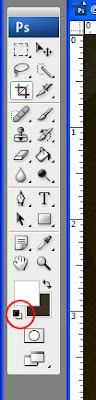 Then go the the layers palette and click on the adjustment layers symbol.
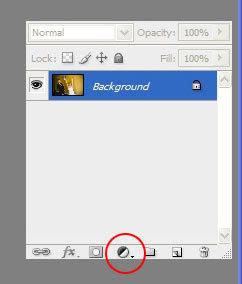
The third and final step is to choose the "Gradient Map" option.
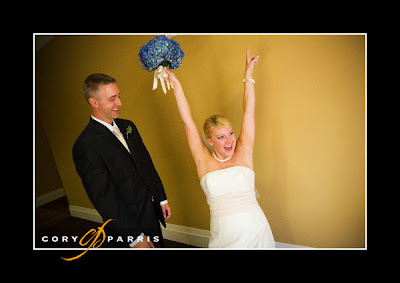
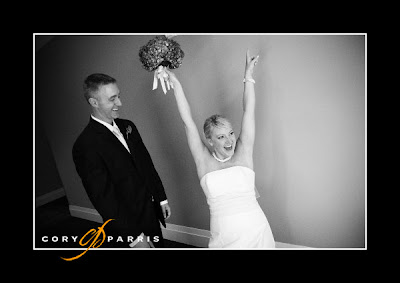
All Done. Here is a before and after.
Today I'm going to show you how to make a really fast, simple, high-contrast black & white conversion.
The first step is to make sure that you have the default black on white color set.
 Then go the the layers palette and click on the adjustment layers symbol.
The third and final step is to choose the "Gradient Map" option.
All Done. Here is a before and after.


Tuesday, February 13, 2007
Monday, February 12, 2007
Where should I get prints made?
One of the hardest things to find is a good lab to make prints for you. My suggestions are MPix for amateurs and ProDPI for advanced amateurs and professionals that have a "managed workflow". MPix provides good color, will make adjustments for you and deliver them to your door for a reasonable price. ProDPI is nearly the perfect lab for me as a professional. Color is excellent, consistant, on the photographic paper I prefer (Fuji), extremely fast and good prices. ProDPI also has the best customer service that I've received from any lab.
Wedding Biz - Shooting!
When I shoot a wedding, I only partially shoot for my client. It sounds crazy since they are spending thousands of dollars to have me there, but it's true.
My main goal when I photograph a wedding is to create what I think is the greatest wedding photographs I have ever created. I do this for me. It is my tastes that I am working with. My satisfaction and approval that I am looking for. My creative drive that I am trying to satisfy. My personal comfort zone that I am stretching, and leaving behind in my effort to create great images.
I am also shooting to create great images to put into my portfolio so I can sell my services to my next bride. I also shoot to add images to the portfolios of the florist, cake artist, venue, wedding coordinator, and band.
As a side benefit, trying to stretch creatively, create amazing work, and putting images into my future portfolio also ends up by delivering some great images for the client that I'm working for! As bizarre as it sounds, my business has increased exponentially by trying to satisfy myself rather than my clients!

My main goal when I photograph a wedding is to create what I think is the greatest wedding photographs I have ever created. I do this for me. It is my tastes that I am working with. My satisfaction and approval that I am looking for. My creative drive that I am trying to satisfy. My personal comfort zone that I am stretching, and leaving behind in my effort to create great images.
I am also shooting to create great images to put into my portfolio so I can sell my services to my next bride. I also shoot to add images to the portfolios of the florist, cake artist, venue, wedding coordinator, and band.
As a side benefit, trying to stretch creatively, create amazing work, and putting images into my future portfolio also ends up by delivering some great images for the client that I'm working for! As bizarre as it sounds, my business has increased exponentially by trying to satisfy myself rather than my clients!

This image was taken during the daylight with flash as the main source of light on the couple. They were extremely backlit, so I set the exposure for the background slightly underexposed to give the darker blue sky and used the flash as the main light. This was something I had wanted to try, but hadn't much until this photograph earlier this year. Now I've done it several times. The couple loved the shot. Bonus!Go forth and produce the images you want. The clients that like those images will love you for it!
Getting the Clients You Want
When you are shooting, whom are you shooting for? Are you creating images you think will sell, or are you shooting to get the clients you want?
About four years ago, I stopped trying to shoot what I thought my current the clients wanted to buy and started creating images that were more representative of what I wanted my portfolio to look like in the future. This is a very important difference in the way I was approaching wedding photography.
As a result of my new mindset, my work improved, my clients’ satisfaction levels went through the roof and most importantly, I was much happier.
The second part of this is only showing the things you want to sell. Don’t show what you think your clients want to see. Show what you love to do and what you excel at. I stopped showing any group portraits on my site or in my sample books.
Eventually, I started to find new, different clients from my old clientele. They wanted what I was showing, were eager to have me at their wedding, and were willing to pay more for it.
This goes for everything you show. Use the albums that you love. Show the wall samples like you want them to buy. Print up postcards that show your favorite image, not the one you think will be the best seller. Unlike with other businesses, if you captured one percent of the market, you would be overloaded, so what we, as photographers, are trying to do is find the RIGHT clients, rather than just any clients.
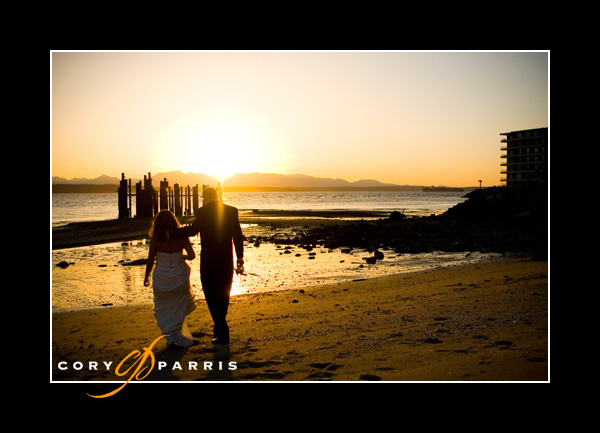
Cory Parris is wedding photographer in Seattle, Washington. He loves his wife, his kids, owning his own business, and photography. He is constantly mixing them together to see what he comes up with!
You can find Cory on the web at www.coryparris.com and here!
Subscribe to:
Posts (Atom)